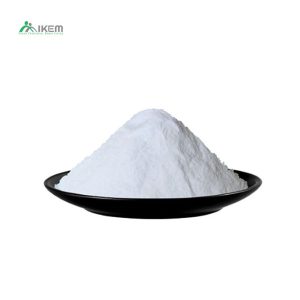
What is 4′-Chloro-2′,5′-dimethoxyacetoacetanilide CAS 4433-79-8?
4′-Chloro-2′,5′-dimethoxyacetoacetanilide CAS 4433-79-8 was introduced in the mid-20th century amid the expansion of synthetic dye technologies. It has established itself as a specialized intermediate in azo chemistry, produced through condensation reactions involving chlorinated dimethoxy anilines and acetoacetic derivatives, with manufacturing protocols refined over decades to support high-volume output for global textile and pigment sectors while integrating into broader supply chains for pharmaceutical precursors.
Specification
| Item |
Value |
| Melting Point |
102-104°C |
| Boiling Point |
432.7±45.0 °C(Predicted) |
| Density |
1.277 |
| pka |
10.75±0.46(Predicted) |
| Color |
White to Light yellow |
| Form |
Powder |
| Storage Temp. |
Sealed in dry, Room Temperature |
Feature
- Standardized Indexing: Designated as C.I. 37613 in color indexing systems, enabling standardized integration into azo coupling workflows for consistent pigment formulation across international dye standards.
- Trade Name Recognition: Known by trade names such as Naphthol AS-IRG, AS-IRG, Naphtol AS-LGII, and Sanatol IRG, reflecting its commercial versatility and long-standing availability from multiple global suppliers for seamless procurement in industrial settings.
- Selective Coupling Agent: Functions as a selective coupling agent in diazotization processes, where its anilide structure promotes efficient linkage with diazonium salts to form stable azo bonds tailored for specific hue ranges like yellows and oranges.
- Derivatization Support: Supports multi-step derivatization pathways, including N-acetylation and ring modifications, allowing customization for advanced pigment variants used in high-performance applications.
- Trade and Compliance: Classified under HS Code 2924.21.4500 for trade, facilitating its export and import in bulk quantities for dye manufacturing hubs, and listed in regulatory inventories like TSCA for compliant commercial deployment.
- Reaction Media Compatibility: Exhibits compatibility with diverse reaction media, such as solvents for condensation with diketene or ethyl 3-oxobutanoate, streamlining synthesis routes that minimize byproducts in large-scale production.
Application
- Azo Pigment and Dye Synthesis: Primarily employed as a key intermediate in manufacturing azo pigments for textiles, including cotton dyeing and printing, where it contributes to vibrant yellow and orange shades with enhanced fastness properties in reactive and discharge printing techniques.
- Textile Coloration Processes: Utilized in the preparation of developer bases for fast pigments applied to fabrics like viscose, wool blends, and synthetic fibers, supporting uniform color uptake and durability in garment production and upholstery finishing.
- Industrial Coatings and Inks: Incorporated into formulations for paints, printing inks, and plastic colorants, leveraging its role in creating light-stable azo derivatives for packaging, automotive coatings, and graphic arts requiring weather-resistant hues.
- Pharmaceutical Intermediate: Acts as a building block in the synthesis of active pharmaceutical ingredients, particularly nitrogen-heterocyclic compounds for antimicrobial and antifungal agents, through targeted reductions and condensations to form bioactive scaffolds.
- Organic Synthesis Research: Serves as a reagent in laboratory-scale development of novel dye analogs and chromophoric materials, aiding studies in materials science for sensor technologies and fluorescent probes in analytical chemistry.
- Specialized Pigment Formulations: Applied in the creation of high-performance pigments for non-textile uses, such as leather tanning agents, paper coatings, and polymer masterbatches, ensuring color consistency under thermal and mechanical stresses in manufacturing.
Packaging
Mikem offers flexible packaging options, including 25 kg of fiber drums for liquid products and 15–25 kg PP/PE bags for powder products, all customizable to meet your specific needs.